

What “Seasonal Eating” Means in Edmonton Winters
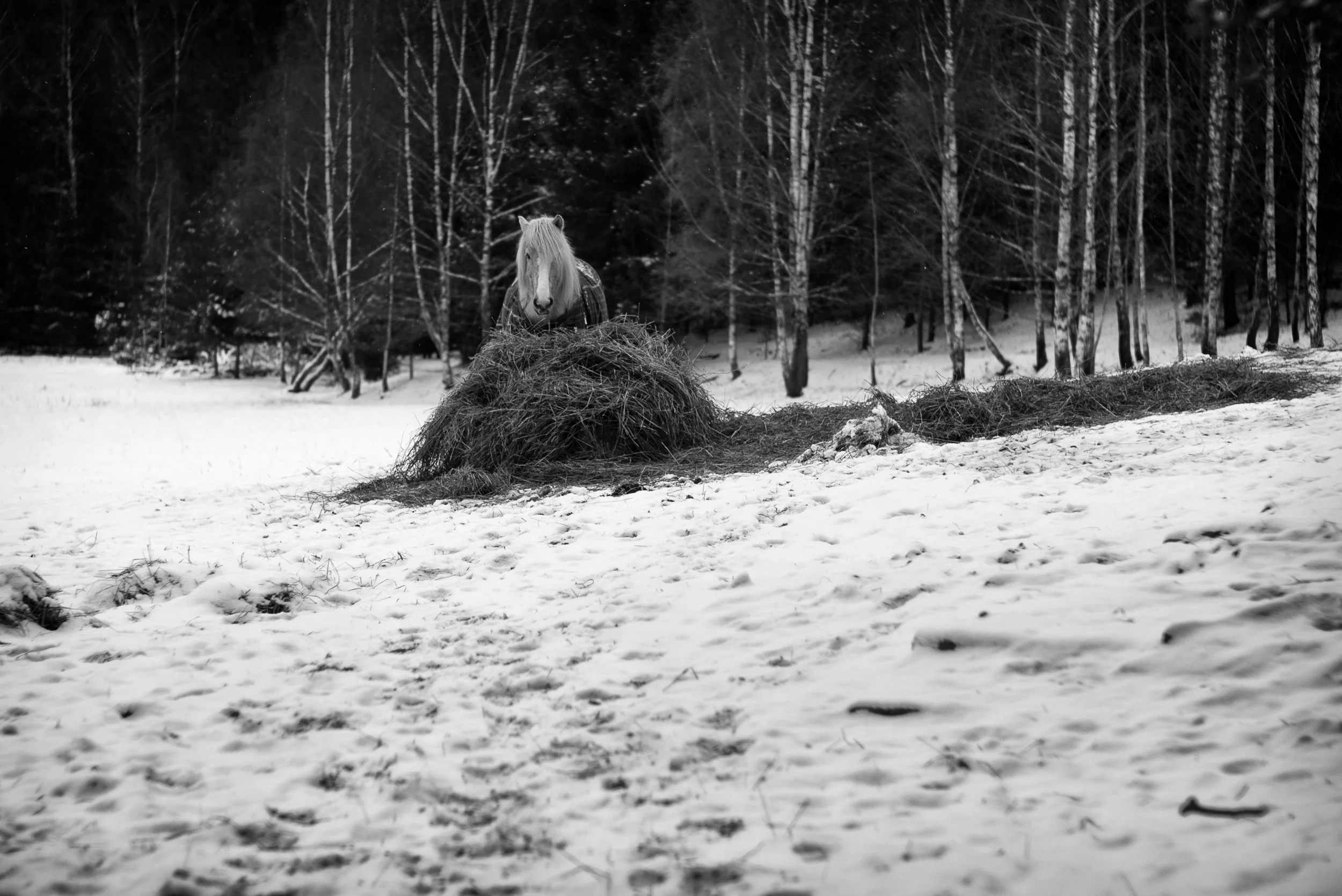
A horse wears its winter coat as it eats from a pile of hay.
Photo credit: Lars Milliberg.
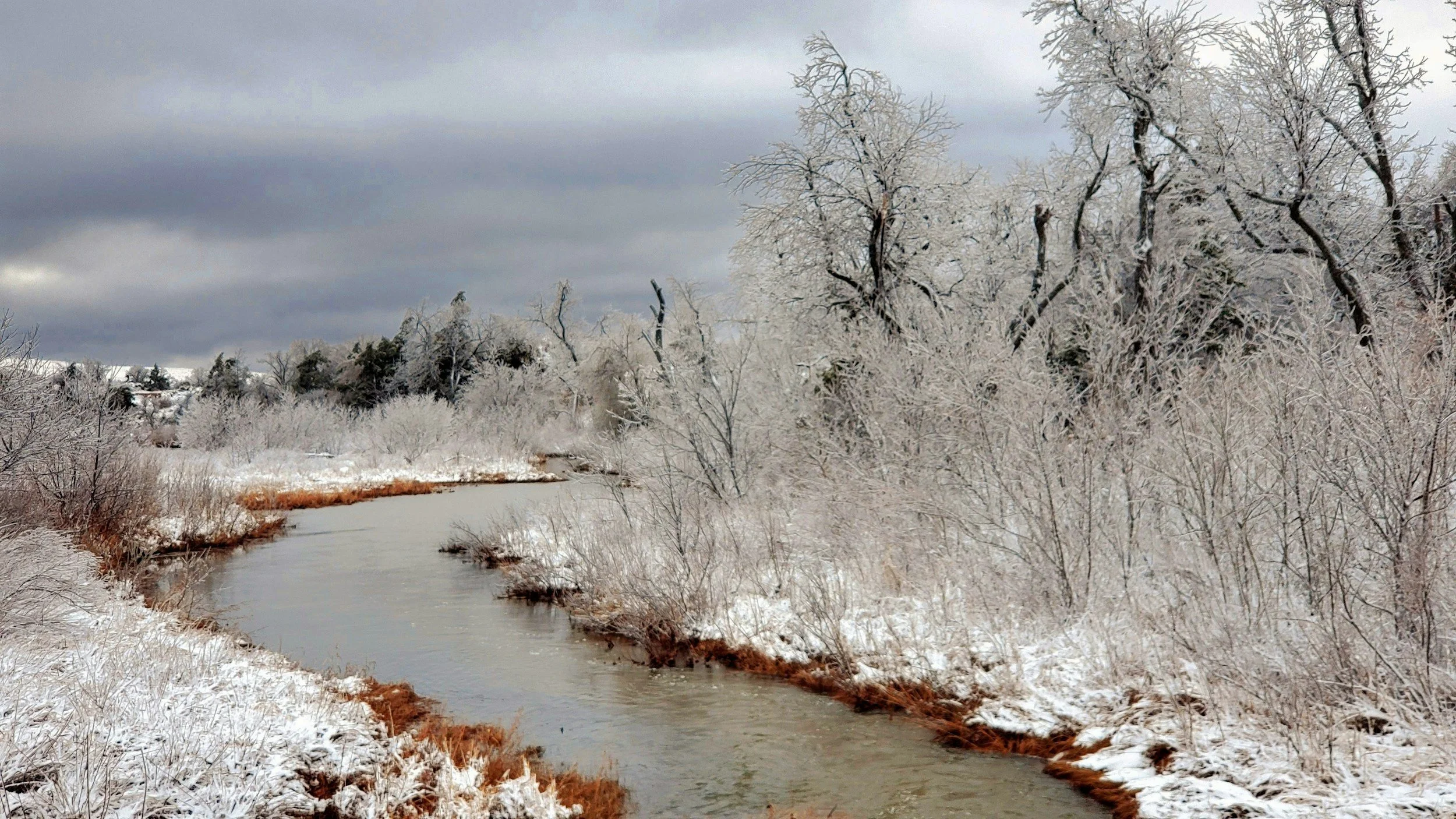
Winter in Edmonton is long and decisive. Snow settles early and remains for months. Daylight shortens. Temperatures drop well below freezing, and the ground becomes inaccessible for much of the year. These conditions shape daily life in ways that are both practical and familiar.
Food access during Edmonton winters reflects this environment. Farmers’ markets contract or pause entirely. Local fields lie dormant beneath snow and frozen soil. Fresh produce continues to appear on store shelves, but it arrives from elsewhere, carried across distance rather than drawn from nearby ground. Much of what is eaten during winter has already been harvested, stored, preserved, or transported.
The systems that support winter eating in Edmonton are built around logistics rather than immediacy. Storage facilities, trade networks, and transportation infrastructure take on greater importance. Root vegetables, grains, preserved fruits, and shelf-stable foods form the backbone of everyday meals. Winter food is not defined by novelty or abundance, but by reliability and continuity.
The phrase “seasonal eating” often enters this landscape from outside it. It appears in cookbooks, food writing, and public conversations that circulate widely, sometimes without reference to climate or geography. In Edmonton, however, winter conditions precede any discussion of food philosophy. The season itself sets the terms.
Seasonal eating, as it is commonly discussed today, emerged largely from regions with extended growing seasons. In these contexts, the concept often emphasizes freshness, variety, and proximity to ongoing harvests. Seasonal eating becomes associated with what is newly available, recently picked, or grown close to home.
This framing developed in particular environments and reflects those conditions. In areas where fields remain productive for much of the year, seasonality can be experienced as a sequence of fresh abundance. The meaning of seasonal eating, in this sense, is closely tied to climate and geography, even when those influences remain unstated.
As the language of seasonal and local food has circulated more broadly, it has traveled into regions with very different seasonal realities. When applied to northern prairie cities, the idea arrives already shaped by other places. Its assumptions about access, timing, and availability do not always align with winter conditions in Edmonton.
Understanding where the concept comes from helps clarify how it functions here. Seasonal eating is not a fixed definition. It is a situated practice, formed within specific landscapes, and shaped by the environments that gave rise to it.
Long before the phrase “seasonal eating” entered contemporary food language, people living on the prairies planned for winter as a matter of necessity. Seasonal change was anticipated months in advance. Food systems were structured around harvesting when conditions allowed and sustaining households when they did not.
Across prairie regions, winter eating depended on preparation. Crops were gathered at the end of the growing season and stored in cellars or granaries. Grains formed a reliable foundation. Fruits were dried or preserved. Root vegetables were kept cool and dark to extend their usefulness. These practices reflected an understanding of winter not as an interruption, but as a known and recurring phase.
Indigenous communities across Canada developed complex food systems adapted to diverse climates, including northern and prairie regions. These systems were deeply seasonal, though seasonality did not depend on continuous freshness. Instead, it rested on cycles of harvesting, preservation, trade, and knowledge passed across generations. Winter was accounted for as part of the annual food system rather than an exception to it.
Seen across time and regions, winter food practices emphasize continuity over immediacy. They rely on planning, storage, and adaptation to climate. In this broader context, seasonal eating has long meant eating in alignment with environmental realities, including months when the land rests beneath snow.
Historical records from Edmonton and the surrounding region document how households adapted food practices to long winters. Archival materials preserved by the City of Edmonton Archives and the Edmonton Public Library’s digital collections record domestic routines that emphasized storage, preservation, and rationing through the cold months. Cellars, pantries, and sheds were not auxiliary spaces. They were central to winter survival and everyday cooking.
Provincial records provide further insight into how prairie food systems functioned across seasons. Materials held by the Provincial Archives of Alberta trace settlement-era practices related to grain storage, root cellaring, and trade networks that connected rural producers with urban centres. These systems allowed food to move across distance and time, offsetting the limitations imposed by climate and geography.
At the national level, Canadian cultural institutions situate these practices within broader food histories. The Royal Alberta Museum documents domestic foodways, agricultural development, and preservation techniques used throughout the province. Collections held by Library and Archives Canada further illustrate how preservation, storage, and trade were foundational to food systems across the country, particularly in regions with pronounced winters.
Within these records, winter food appears consistently as planned and expected. Preservation methods such as drying, fermenting, smoking, and storing were not secondary strategies. They formed the core of how food systems operated. Freshness, as it is often framed today, was less relevant than durability, nourishment, and continuity.
Indigenous food systems provide an essential lens for understanding seasonality in northern climates. Across what is now Canada, Indigenous communities developed food systems rooted in deep ecological knowledge and long-term observation. These systems incorporated harvesting, preservation, and sharing practices that accounted for winter as part of the yearly cycle. Contemporary work documented by the Indigenous Food Systems Network highlights how these practices continue to inform discussions of food sovereignty, sustainability, and climate adaptation.
For further context on Indigenous food traditions and their regional diversity, see Traditional Indigenous Foods in Canada. Historical examples of prairie preservation and seasonal fruit use are also explored in Crabapples in Prairie Food History.
When viewed through local history and climate, seasonal eating in Edmonton winters takes on a different meaning. It is not defined by what is newly harvested nearby in January. It is defined by reliance on foods gathered earlier, preserved intentionally, and moved through established networks of trade and storage.
Winter has long structured how food is grown, stored, and shared on the prairies. Seasonal eating, understood in this context, reflects adaptation rather than restriction. It recognizes the role of grains, preserved produce, and imported foods as part of a system designed to endure cold, distance, and limited daylight.
Seen this way, seasonal eating in Edmonton winters aligns with longer food histories rather than departing from them. It reflects continuity across generations and food systems shaped by climate, geography, and knowledge accumulated over time.
These food traditions reflect practical responses to winter as a defining condition, not an obstacle to be overcome, and they continue to shape how seasonality is understood in northern places today.
If curiousity continues…
An Indigenous 501c3, focused on Indigenous Education+Food Access through the @indigenousfoodlab
Urban Inuk. Throat singer. Often shares Inuit culture, including traditional food sources.



Haskaps have long histories across northern regions, including the Canadian prairies. Knowledge of these early berries varies by place, Nation, and seasonal practice, shaped through observation, gathering, and use over time. Indigenous knowledge systems form the foundation of how haskaps have been understood, named, and used within broader food landscapes, a principle reflected in Indigenous-led research and knowledge-sharing initiatives such as the Canadian Indigenous Knowledge Network.